
Professional Drywall Installation Services in Wilton, CT
NBA Construction & Remodeling installs drywall in Wilton homes throughout the village area near Cannon Crossing, Wilton Center, Olmstead Hill, Belden Hill, and the wooded estate areas of town. Eighteen years in Fairfield County means our crew has worked in every Wilton neighborhood. The town has a mix of historic colonials from the 1700s and 1800s, mid century moderns, and contemporary builds on multi acre wooded lots. Each construction era requires different drywall approaches and finishing techniques. The standards do not change. We hang sheetrock straight, fasten it tight, and prepare walls for finishing.
Most Wilton projects we handle fall into three categories. New construction and additions on wooded estate properties in Olmstead Hill and Belden Hill where we hang rooms from rough framing. Renovations of village area historic homes near Cannon Crossing where existing plaster walls come down and new drywall goes up. And repairs throughout Wilton where settling cracks, water damage, and wear from decades of family use need real fixes. Each project type teaches a crew different skills. Wilton variety, from village cottages to estate homes, demands flexibility on every job we handle.
Wilton has its own quirks. The Norwalk River runs through town and the wooded character of Wilton properties means higher humidity around homes than open suburban areas. Older village area homes often have plaster walls behind drywall, irregular framing, and original details that need to be preserved during renovation. Newer construction on wooded lots has modern framing but high ceilings and large open spans common in custom built estates. Wilton commercial work along the Boston Post Road requires fire rated assemblies. Our crew has worked all of these property types and brings the right experience to each.
New Drywall Installation in Wilton
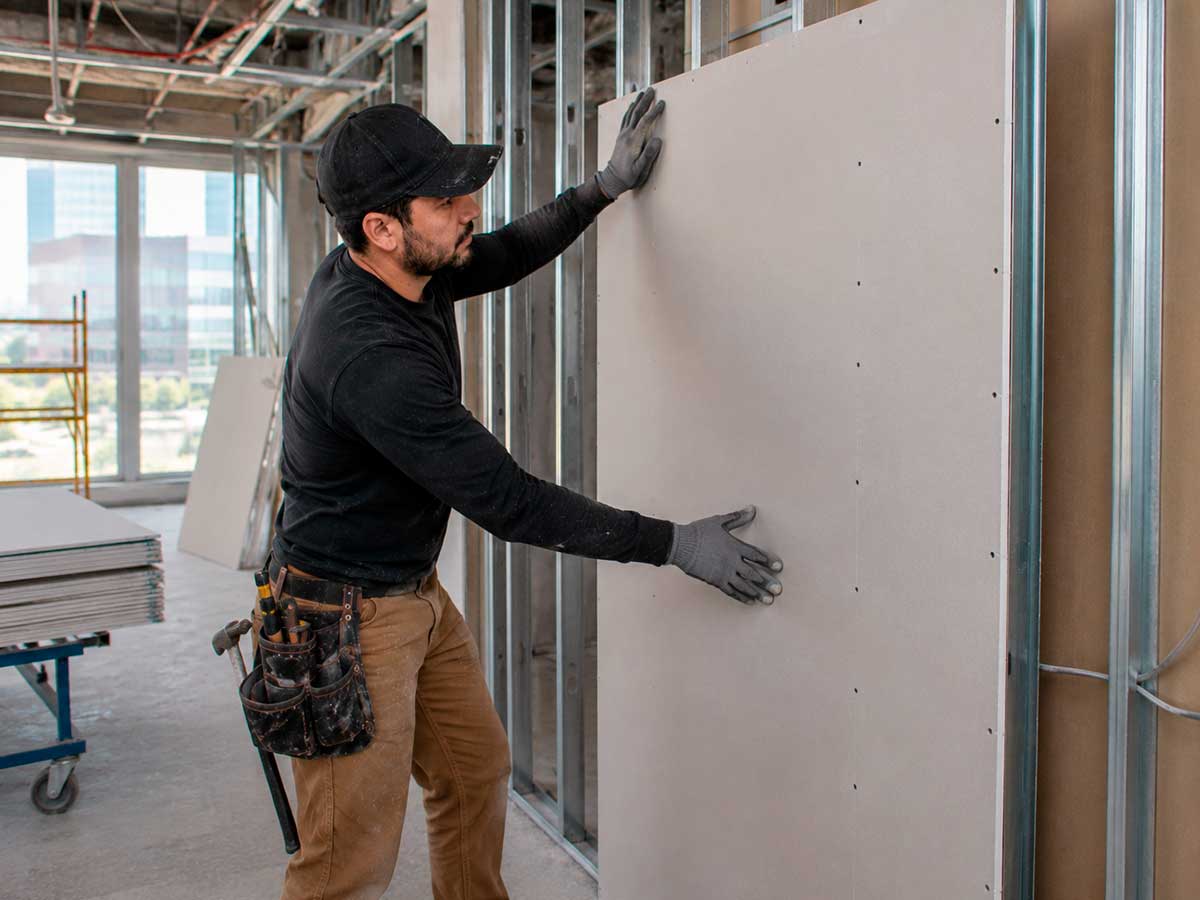
New drywall installation in Wilton starts with framing inspection. Whether the project is an Olmstead Hill estate, a Wilton Center addition, or village area renovation, we check that studs are plumb, joists level, and openings square before any sheets go up. Wilton estate construction often has high ceilings, large great rooms, and complex layouts that demand careful drywall planning. We use 5/8 inch board on ceilings for sag resistance, especially on long spans common in Belden Hill estate construction. On walls we standardize on 1/2 inch unless code calls for thicker assemblies in fire rated areas.
Fastening on Wilton projects follows code and our standards. Auto feed screw guns set to the right depth, fasteners spaced twelve inches on field for ceilings and sixteen inches on walls, edges every eight inches. Wilton estate ceilings with vaults or coffers need extra fastener attention because of the open spans and high visibility. Glue and screw assemblies on framing layouts that call for it. Every joint, every corner, every transition gets the right treatment for the situation. Wilton finish work depends on this install standard being right from the first sheet that goes up.
Cuts and fits are critical on Wilton estate projects. High end Olmstead Hill and Belden Hill homes have custom trim profiles, integrated lighting, and architectural details that demand precise drywall cutouts. Older village area homes have unique outlet positions and original millwork that need exact matching. Our crew measures, scores, and snaps without overshoot. We use rotary cutout tools where they save time, but most cuts are still done by hand because hand cuts give you control. Once a Wilton room is hung, we walk every wall and ceiling for problems before the finish crew arrives.
Drywall Repair and Replacement
Drywall repair in Wilton homes is common in older village area properties and historic Cannon Crossing area homes. Houses built in the 1700s, 1800s, and early 1900s have settling cracks, water damage, and wear that need real repair. We approach repairs the same way we approach new installs. The damaged section gets cut back to the next stud or joist, the patch is fitted snug with no gaps, and screws fasten it the same way the original was fastened. Then taping and finishing crews bring it level with the surrounding wall.
Water damaged drywall in Wilton homes typically comes from ice dams on older properties, plumbing failures in homes with outdated systems, or moisture from the wooded environment around the house. The first step is finding and stopping the source. After that, all wet board comes out, the framing is dried and inspected for mold, and replacement sheets go up only after the cavity is dry. We have replaced ceilings damaged by ice dams in older Wilton colonials. Skipping these steps means the problem comes back within a year.
Settling cracks, popped nails, and corner bead damage are the most common repairs we see in occupied Wilton homes. Older village area homes often have layered repairs from previous renovations that hide the original problem. We address each properly. Cracks get cut, taped, and refinished. Popped nails get reset and finished. Damaged corner bead gets removed and replaced. After we leave a Wilton home, the wall should look like the damage never happened, blending invisibly into the surrounding original work or matching the modern finish of newer construction.
Why Drywall Quality Matters in Wilton
Wilton wooded character and inland location create climate conditions hard on buildings. Higher humidity from surrounding vegetation, snow loads in winter, and freeze thaw cycles in spring move framing in ways that telegraph through finished walls. Drywall installed in Wilton homes without attention to these conditions develops cracks within a few seasons. Quality installation accounts for movement. Proper screw spacing, control joints, and the right fastener type for the substrate all play a role in walls that hold for decades versus walls that fail and need repair every few years.
Connecticut building code sets standards but quality Wilton installation goes further. Wilton estate homes often have fire rated assemblies between living areas and garages, sound rated walls between bedrooms and family rooms, and moisture resistant board in extensive bathroom assemblies. Older village area homes need work that matches existing plaster textures and respects original architectural details. We know when each applies and we install accordingly. The Wilton Building Department inspector signs off because the work meets code. The client is satisfied because the home performs correctly.
Cost matters in Wilton but cheap drywall work always costs more in the long run. Wilton estate homes often have high end finishes and design intent that show every flaw in underlying drywall work. Older village area homes have historic character that suffers from poorly matched repairs. Doing it right the first time is cheaper than doing it twice. That is why we charge what we charge and why our Wilton clients keep calling us back for the next project on the same property or on the next home they buy in town.