
Professional Drywall Installation Services in White Plains, NY
NBA Construction & Remodeling installs drywall in White Plains homes throughout downtown, Highlands, Battle Hill, North Street, Gedney Farms, and the Mamaroneck Avenue commercial corridor. Eighteen years working in Westchester County means our crew knows White Plains construction. The city has a mix of early 1900s residential neighborhoods, mid century homes, modern condominium developments, and significant downtown commercial activity. Each property type requires different drywall approaches. Whether the project is a Highlands single family home or a downtown commercial buildout, we hang sheetrock straight, fasten it tight, and prepare walls for finishing.
Most White Plains projects we handle fall into three categories. Residential renovations and additions in Highlands, Battle Hill, and Gedney Farms where new drywall blends into existing plaster. Commercial buildouts in downtown White Plains and along Mamaroneck Avenue where retail and office spaces need fire rated assemblies. And multifamily and condominium work throughout the city where demising walls need fire and sound rated assemblies. Each project type teaches a crew different skills. The mix of commercial and residential work in White Plains keeps our crew versatile and adaptable on every project we deliver.
White Plains has its own quirks. The city sits inland in central Westchester County with cold winters, snow loads, and humid summers. The Bronx River runs through town and there is significant elevation change between downtown and surrounding neighborhoods. Older residential areas like Highlands and Battle Hill have homes from the early 1900s with plaster walls and original details. Downtown commercial activity has produced high rise development with strict code requirements. Mamaroneck Avenue retail and Gedney Farms residential each have their own characteristics. Our crew has worked all of these property types in White Plains.
New Drywall Installation in White Plains
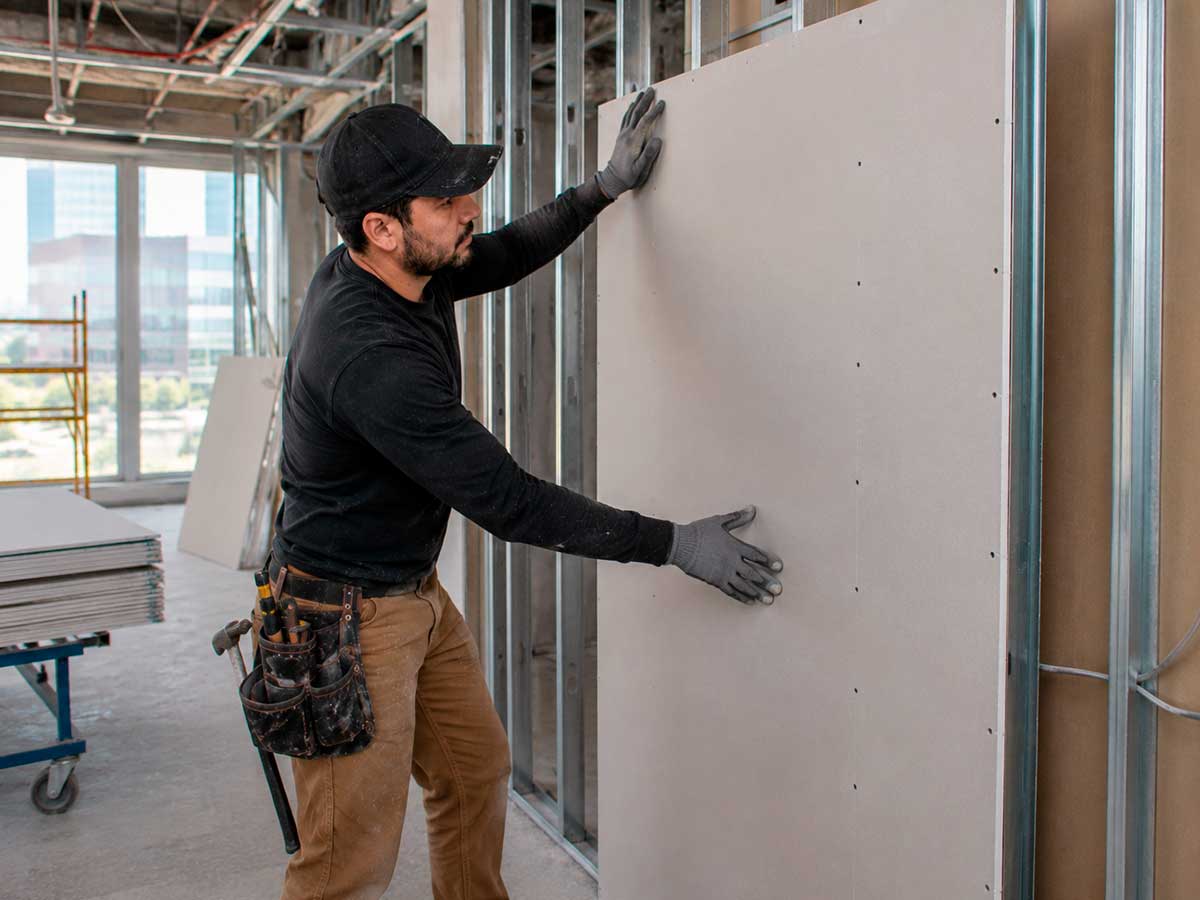
New drywall installation in White Plains starts with framing inspection. Whether the project is a Highlands new construction, a downtown commercial fitout, or a Gedney Farms addition, we check that studs are plumb, joists level, and openings square before drywall goes up. Layout sheets to minimize butt joints, stagger seams between courses, and keep tapered edges where they belong. White Plains downtown high rise construction has specific code requirements for fire rated assemblies. Residential new construction in Battle Hill has modern open layouts. We use 5/8 inch board on ceilings and 1/2 inch on walls unless code calls for thicker.
Fastening on White Plains projects follows code and our standards. Auto feed screw guns set to the right depth, fasteners spaced twelve inches on field for ceilings and sixteen inches on walls, edges every eight inches. Downtown commercial high rise work needs additional fasteners at fire rated assemblies, shaft walls, and demising walls between tenant spaces. Mamaroneck Avenue retail buildouts need code compliant fire rating. Glue and screw assemblies on framing layouts that call for it. Every joint, every corner, every transition gets the right treatment for the situation we encounter on the White Plains project.
Cuts and fits matter on White Plains projects. Older Highlands and Battle Hill homes have unique outlet positions, original trim profiles, and architectural details that demand precise cutouts. Downtown commercial work has specific equipment locations, mechanical chases, and ceiling integrations. Mamaroneck Avenue retail has display and lighting integrations that need exact drywall fits. Our crew measures, scores, and snaps without overshoot. We use rotary cutout tools where they save time, but most cuts are still done by hand because hand cuts give you control on every White Plains project we work.
Drywall Repair and Replacement
Drywall repair in White Plains homes is common in older Highlands, Battle Hill, and Gedney Farms properties built in the early 1900s. These homes have settling cracks, water damage from ice dams, and wear from decades of family use. We approach repairs the same way we approach new installs. The damaged section gets cut back to the next stud or joist, the patch is fitted snug with no gaps, and screws fasten it the same way the original was fastened. Then taping and finishing crews bring it level with the surrounding wall.
Water damaged drywall in White Plains homes typically comes from ice dams on older properties, plumbing failures in homes with outdated systems, or roof leaks. Downtown commercial buildings sometimes have water damage from sprinkler activations or roof issues that require full ceiling tile and drywall replacement. The first step is finding and stopping the source. After that, all wet board comes out, the framing is dried and inspected for mold, and replacement sheets go up only after the cavity is dry. Skipping these steps means the problem comes back within a year of repair.
Settling cracks, popped nails, and corner bead damage are the most common repairs we see in occupied White Plains homes. Older Highlands and Battle Hill homes often have layered repairs from previous renovations. We address each properly. Cracks get cut, taped, and refinished. Popped nails get reset and finished. Damaged corner bead gets removed and replaced. After we leave a White Plains home, the wall should look like the damage never happened, blending invisibly into the original architecture or matching the modern finish of newer construction in the city.
Why Drywall Quality Matters in White Plains
White Plains inland Westchester County location means cold winters with snow loads and ice dam risks, plus humid summers that affect framing year round. These conditions move framing in ways that telegraph through finished walls. Drywall installed in White Plains homes without attention to seasonal cycles develops cracks at joints and corners within a few seasons. Quality installation accounts for movement. Proper screw spacing, control joints in long walls, and the right fastener type for the substrate all play a role. This is the difference between a White Plains wall that holds for decades and one that needs constant repair.
New York building code sets standards but quality White Plains installation goes further. Downtown commercial high rise development has strict fire rating requirements with UL listed assemblies, sound transmission ratings between tenant spaces, and specific shaft wall details. Mamaroneck Avenue retail needs code compliant assemblies. Bathrooms and kitchens need moisture resistant board behind tile. We know when each applies and we install accordingly. The White Plains Department of Building inspector signs off because the work meets code. The client is satisfied because the wall performs correctly long term.
Cost matters in White Plains but cheap drywall work always costs more in the long run. Bad installs hide flaws under primer and paint, then telegraph through after a few months when joints settle and corners crack. Downtown commercial tenants face lost rent when work fails inspection. Mamaroneck Avenue retail spaces lose business during repair work that should not be needed. Doing it right the first time is cheaper than doing it twice. That is why we charge what we charge and why our White Plains clients keep calling us back for the next project they have.