
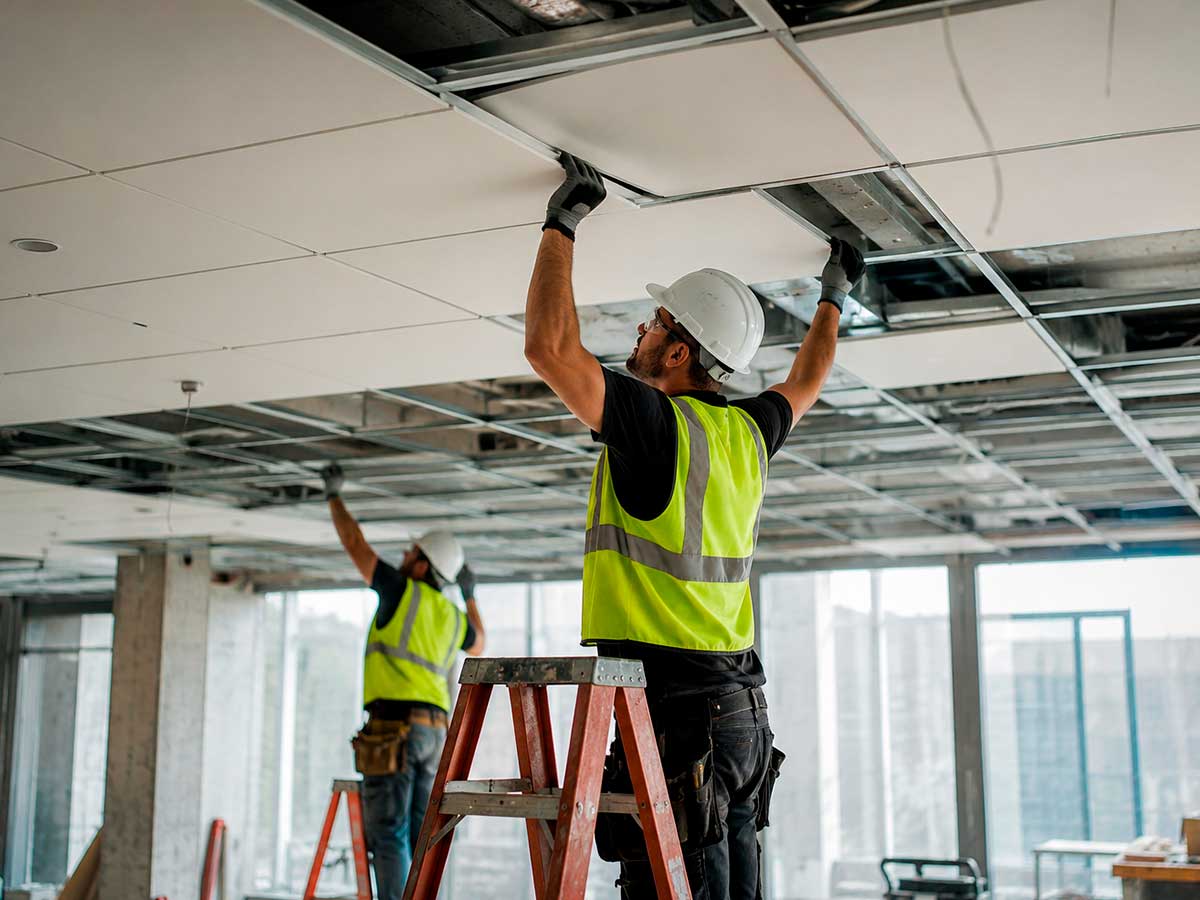
Professional Acoustic Ceiling Services in Greenwich, CT
NBA Construction & Remodeling installs acoustic ceilings in Greenwich offices, retail spaces, and commercial buildouts throughout Greenwich Avenue, Putnam Avenue, downtown commercial buildings, and Old Greenwich business areas. Eighteen years working in Fairfield County means our crew knows Greenwich commercial ceiling needs. Drop ceiling grid systems hide HVAC ductwork, electrical conduit, and plumbing while providing access for maintenance. Greenwich Avenue retail tenants need clean ceilings that match the high end aesthetic of the corridor. Office buildouts need acoustic tiles for sound absorption between workspaces.
Most Greenwich acoustic ceiling projects we handle fall into three categories. Office buildouts where we install drop ceiling grid, lay in acoustic tiles, and integrate light fixtures, HVAC diffusers, and sprinkler heads into the grid system. Retail buildouts on Greenwich Avenue and downtown areas where ceiling appearance matters as much as function. And commercial renovations where existing acoustic ceilings need tile replacement, grid repair, or complete tear out and replacement. Each project type requires understanding of Greenwich code requirements, building specifications, and tenant aesthetic expectations.
Greenwich has its own quirks for acoustic ceiling work. Greenwich Avenue retail spaces have high ceilings dropping to grid heights that need careful coordination with storefront design. Downtown office buildings have HVAC systems above the grid that require specific access tile placement for maintenance. Older Greenwich commercial buildings have plenum spaces that need fire rated ceiling assemblies in some cases. Modern Class A office space in Greenwich downtown has higher acoustic tile specifications than basic retail work. Greenwich coastal humidity in waterfront commercial spaces affects ceiling tile longevity and may dictate moisture resistant tile selection.
Drop Ceiling Grid Installation in Greenwich
Drop ceiling grid installation in Greenwich starts with the layout. We snap chalk lines for the perimeter wall angle and main runners. The grid drops from the structure above using suspension wire at four foot intervals or per the manufacturer specifications. Greenwich office buildouts often have ceiling heights of nine or ten feet finished, with grid heights typically eight to nine feet from finished floor. We coordinate with the architect drawings and the HVAC, electrical, and sprinkler trades to set grid height that clears all systems. Standard 2x4 grid or 2x2 grid depending on the tile pattern the design specifies for the project.
Main runners install first in Greenwich grid systems. We use 12 foot main tee sections with locking ends that snap together for continuous runs. Greenwich Avenue retail spaces often have wide open floor plans that require careful main runner planning to maintain straight lines through the space. Cross tees install at four foot or two foot intervals depending on grid pattern. The grid needs to be level within tolerance specified by the manufacturer. We use a laser level to set grid height and check level as we install. Out of level grid creates tile binding and uneven ceiling appearance throughout.
Wall angle install completes the grid perimeter in Greenwich projects. The wall angle attaches to walls or partition tops with screws into framing, anchored to drywall with toggle bolts where no framing exists. Greenwich high end commercial spaces often have specific wall angle finishes matching the grid color, with white most common but black or custom colors for design intent. Our crew checks every wall angle for level and proper attachment before moving to tile installation. The finished grid system supports tiles, light fixtures, HVAC diffusers, and sprinkler heads with the integrity that Greenwich commercial work demands long term.
Acoustic Tile Selection and Installation
Acoustic tile selection in Greenwich depends on the space and use. Standard 2x4 mineral fiber tiles work for basic office and retail spaces. Higher end Greenwich commercial work often specifies 2x2 fine textured tiles with higher NRC ratings for sound absorption. Restaurant and food service spaces need vinyl faced tiles or moisture resistant tiles that handle humidity and clean easily. Greenwich Avenue retail tenants sometimes specify custom tiles in different colors or patterns for design effect. We work from the architect specifications and tile schedule to install the right product for each Greenwich commercial space type and tenant.
Tile installation in Greenwich grid systems requires careful handling. Mineral fiber tiles are fragile at the edges and stain easily from handling marks. We wear cotton gloves and lay tiles in carefully through the grid openings. Cut tiles around HVAC diffusers, light fixtures, sprinkler heads, and access points need clean precise cuts that fit tight to the fixtures without gaps. Greenwich high end commercial work demands careful attention to these cut tile details. A poorly cut tile around a recessed light shows immediately under the lighting itself. We measure twice and cut once, with backup tiles for any cutting errors.
Light fixtures, HVAC diffusers, sprinkler heads, and access panels integrate into the grid system on Greenwich projects. We coordinate with the trades to set fixture sizes that match the grid module, typically 2x4 or 2x2 depending on the system. Recessed troffer lights install in the grid openings supported by the grid itself or independent suspension. HVAC diffusers drop in through the grid to ductwork above. Sprinkler heads pop through the tiles via escutcheon plates. Access panels for valves, dampers, and other maintenance points install where the architect drawings specify. Coordination with Greenwich trades prevents conflicts during the install.
Why Acoustic Ceiling Quality Matters in Greenwich
Greenwich commercial tenants notice ceiling quality immediately. Greenwich Avenue retail customers see the ceiling when they enter. Downtown office tenants work under the ceiling all day and see every flaw. Stained tiles, sagging grid, uneven tile cuts around fixtures, and damaged tiles from handling all show immediately and cheapen the appearance of high end Greenwich commercial spaces. Quality acoustic ceiling work pays for itself in tenant satisfaction and lease renewal rates that landlords and property managers track. Cheap ceiling work costs more in callback repairs, tile replacement, and tenant complaints than quality work costs upfront on the project.
Code compliance in Greenwich commercial work demands attention to ceiling assemblies in some applications. Plenum return air spaces need fire rated tiles in ratings the architect specifies. Sprinkler systems need proper coordination with grid layout and tile cuts to avoid head obstruction. Greenwich Building Department inspectors check ceiling installations for code compliance during commercial buildout inspections. We install per the architect drawings, manufacturer specifications, and Connecticut building code requirements. Code compliant ceiling work passes inspection the first time and protects the building owner from liability for ceiling failures during the property life.
Cost matters in Greenwich but cheap acoustic ceiling work always costs more in the long run. Wrong tile selection means replacement within years from sagging, staining, or moisture damage. Improperly installed grid sags and fails. Skipped suspension wire creates unsafe ceilings that fail under tile and fixture loads. Greenwich Avenue retail tenants and downtown office occupants notice every flaw. Doing it right the first time is cheaper than doing it twice. That is why we charge what we charge and why our Greenwich commercial clients, property managers, and tenant fitout coordinators keep calling us back for the next acoustic ceiling project they need.