
Seasonal Humidity Cycles in Connecticut
Connecticut humidity swings between 30 percent in winter when heating systems dry out interior air to 70 percent or higher in summer. This fifty point swing causes wood framing behind your drywall to expand and contract through the year. The drywall itself moves less than the framing, which creates stress at fastener locations and seams. Hairline vertical cracks running from window or door corners are typically humidity related. They open in winter when wood shrinks, then partially close in summer. Older Connecticut homes with original plaster or older drywall installations show this pattern more dramatically because the original installation may not have used proper expansion gaps or modern fastener spacing.
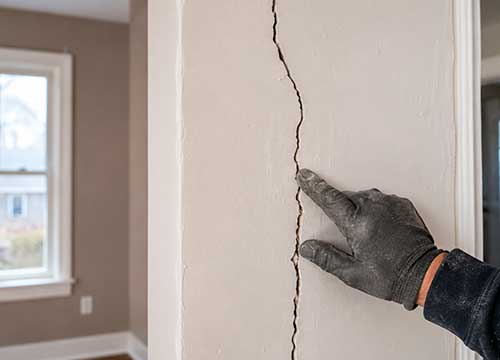
Look at the crack pattern before you patch it.
A clean vertical crack near a door or window usually points to seasonal movement. Wider cracks or diagonal patterns need closer inspection.
Foundation Settlement and Structural Cracks
Some drywall cracks indicate foundation settlement, which is more serious. Stair step cracks running diagonally through corners, horizontal cracks longer than three feet, and cracks wider than a quarter inch deserve professional evaluation. Connecticut homes built on clay soils common in Hartford County and parts of Fairfield County experience more settlement than homes on rocky New England bedrock. Coastal Milford and Fairfield homes near Long Island Sound sometimes settle from water table changes. If your drywall crack is paired with sticking doors, sloping floors, or visible foundation issues, the drywall is showing you a structural problem that needs an engineer evaluation before any repair work begins.
Tape Failure and Installation Problems
Drywall seam cracks running in straight horizontal or vertical lines along sheet edges usually mean tape failure. Original installation may have used insufficient mud, improper paper tape application, or skipped the second and third coats needed for durable seams. Connecticut homes built quickly during the 1970s, 1980s, and even some recent construction sometimes have these tape failures showing up ten to twenty years after the original work. Fixing tape failure right means cutting out the failed section, retaping with paper tape, applying three coats of mud sanded smooth between coats, and matching the wall texture. Quick fixes that just spackle over failed tape come back within a year.
When to Repair Versus Replace Drywall
Most drywall cracks in Connecticut homes need repair, not replacement. Hairline humidity cracks can be patched with proper fiber tape and three coats of mud. Tape failures need section repair with new tape and finish work. Settlement cracks need structural evaluation first, then repair after the foundation is stable. Full drywall replacement makes sense when sections have water damage, mold, or extensive failure throughout the room. We see this most often in basements with moisture problems, bathrooms with ventilation issues, and kitchens with hidden plumbing leaks. Most Connecticut drywall crack repairs cost a few hundred dollars per area when handled by a professional rather than DIY repeat work.