
Professional Drywall Installation Services in Greenwich, CT
NBA Construction & Remodeling installs drywall in Greenwich homes, estates, and small commercial spaces. Eighteen years on the job in Fairfield County means our crew knows what works in Greenwich construction. Belle Haven waterfront homes, Old Greenwich beach properties, and Backcountry estates all face different conditions, but the standards do not change. We hang sheetrock straight, fasten it tight, and prepare walls and ceilings for finishing. Whether the project is a historic colonial renovation in Riverside or a new construction estate in North Greenwich, the install is consistent.
Most Greenwich projects we handle fall into three categories. New construction in Backcountry where we hang full rooms or entire estates from rough framing. Renovations in Old Greenwich and Belle Haven where existing plaster walls come down and new drywall goes up. And repairs throughout town where settling cracks, water damage, or wear from decades of use need real fixes. Each type calls for a different approach. Old Greenwich homes need patient demo work. New Backcountry construction needs production speed without losing quality. Greenwich variety teaches a crew to adapt.
Greenwich has its own quirks. Older homes in Belle Haven, Old Greenwich, and Riverside often have plaster walls behind drywall, irregular framing from multiple renovations over the decades, and tight working spaces in finished basements. Newer construction in Backcountry and parts of North Greenwich uses modern stud framing but often has high ceilings and large open spans that need attention to expansion control. Our crew has worked all of these types of homes. We bring the right materials, the right tools, and enough Greenwich experience to spot the problem before it becomes a callback.
New Drywall Installation in Greenwich
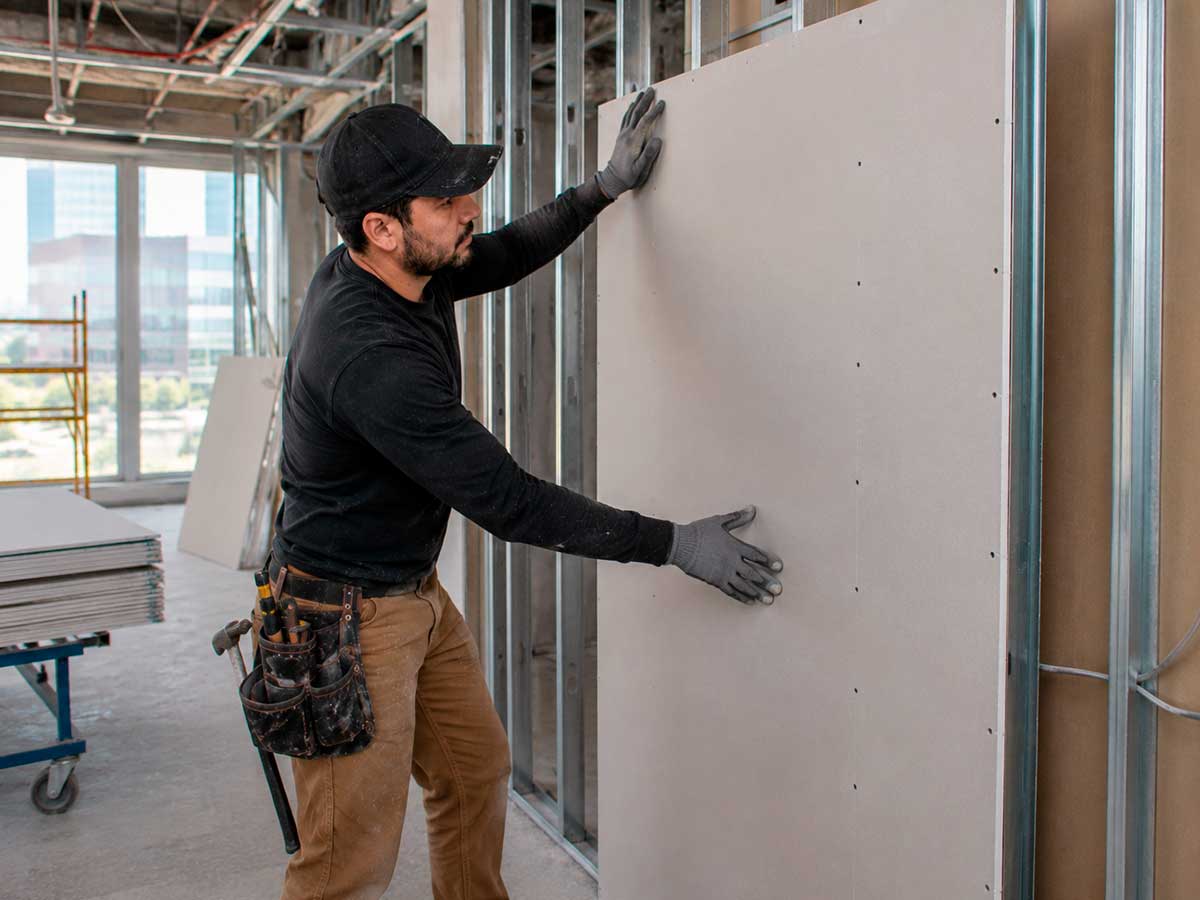
New drywall installation in Greenwich starts with the framing. Whether the project is a Backcountry estate or a downtown commercial space, we check that studs are plumb, joists are level, and openings are square before a single sheet goes up. Greenwich new construction often has high ceilings, large open rooms, and complex layouts. Layout sheets to minimize butt joints, stagger seams between courses, and keep tapered edges where they belong. On Greenwich ceilings we use 5/8 inch board for sag resistance, especially on long spans common in modern Backcountry construction.
Fastening on Greenwich projects follows code and our standards. Auto feed screw guns set to the right depth, fasteners spaced twelve inches on field for ceilings and sixteen inches on walls, edges every eight inches. Glue and screw assemblies on framing layouts that call for it. Greenwich estates with great rooms and vaulted ceilings need extra fastener attention because of the open spans and the way light catches every imperfection. Every joint, every corner, every transition gets the right treatment for the situation. Greenwich finish work depends on this install standard.
Cuts and fits are the difference between a clean install and a sloppy one. Greenwich homes have features that other towns do not. Coffered ceilings, custom trim profiles, archways, and built in cabinetry all need precise drywall cutouts. Our crew measures, scores, and snaps without overshoot. We use rotary cutout tools where they save time on Greenwich estate scale projects, but most cuts are still done by hand. Once a Greenwich room is hung, we walk every wall and ceiling looking for missed screws, soft spots, or rough edges before the finish crew arrives.
Drywall Repair and Replacement
Drywall repair in Greenwich homes is more common than new installation. Older Belle Haven, Riverside, and Old Greenwich homes have settling cracks, plaster transitions, and water damage from coastal weather and old plumbing. We approach repairs the same way we approach new installs. The damaged section gets cut back to the next stud or joist, the patch is fitted snug with no gaps, and screws fasten it the same way the original was fastened. Then taping and finishing crews bring it level with the surrounding wall.
Water damaged drywall in Greenwich coastal homes near Long Island Sound or in older basements throughout town needs more than a patch. The first step is finding and stopping the source. After that, all wet board comes out, the framing is dried and inspected for mold, and replacement sheets go up only after the cavity is dry and clean. We have replaced ceilings damaged by ice dams in older Greenwich homes and seen what happens when previous contractors cut corners. Our process takes longer but the repair holds for years.
Settling cracks, popped nails, and corner bead damage are the most common repairs we see in occupied Greenwich homes. Greenwich estates that have been through multiple renovations often have layered repairs that hide the original problem. We address each properly. Cracks get cut, taped with paper or mesh, and refinished. Popped nails get reset, screwed beside the original fastener, and finished. Damaged corner bead gets removed and replaced. After we leave a Greenwich home, the wall should look like the damage never happened, blending invisibly into the surrounding original work.
Why Drywall Quality Matters in Greenwich
Greenwich coastal weather is hard on buildings. Long Island Sound humidity, freeze thaw cycles in spring, and significant temperature swings move framing in ways that telegraph through finished walls. Drywall installed in Greenwich homes without attention to these conditions develops cracks within a few seasons. Quality installation accounts for movement. Proper screw spacing, control joints in long Backcountry estate walls, and the right fastener type for the substrate all play a role. This is the difference between a Greenwich wall that holds for decades and one that needs repair in three years.
Connecticut building code sets minimum standards but Greenwich homes often exceed them. Estate scale projects in Backcountry and North Greenwich have fire rated assemblies between living areas and garages, sound rated walls between bedrooms and family rooms, and moisture resistant board in extensive bathroom and pool house assemblies. Our crew knows when each applies and we install accordingly. The Greenwich Building Department inspector signs off because the work meets code. The client is satisfied because the wall performs the way it should for as long as they own the home.
Cost matters in Greenwich but cheap drywall work always costs more in the long run. Bad installs hide flaws under primer and paint, then telegraph through after a few months when the joints settle and corners crack. In a Greenwich estate where the finish work might run into six figures, the cost of redoing failing drywall is significant. Doing it right the first time is cheaper than doing it twice. That is why we charge what we charge and why our Greenwich clients keep calling us back for the next project on the same property or on the next one.