
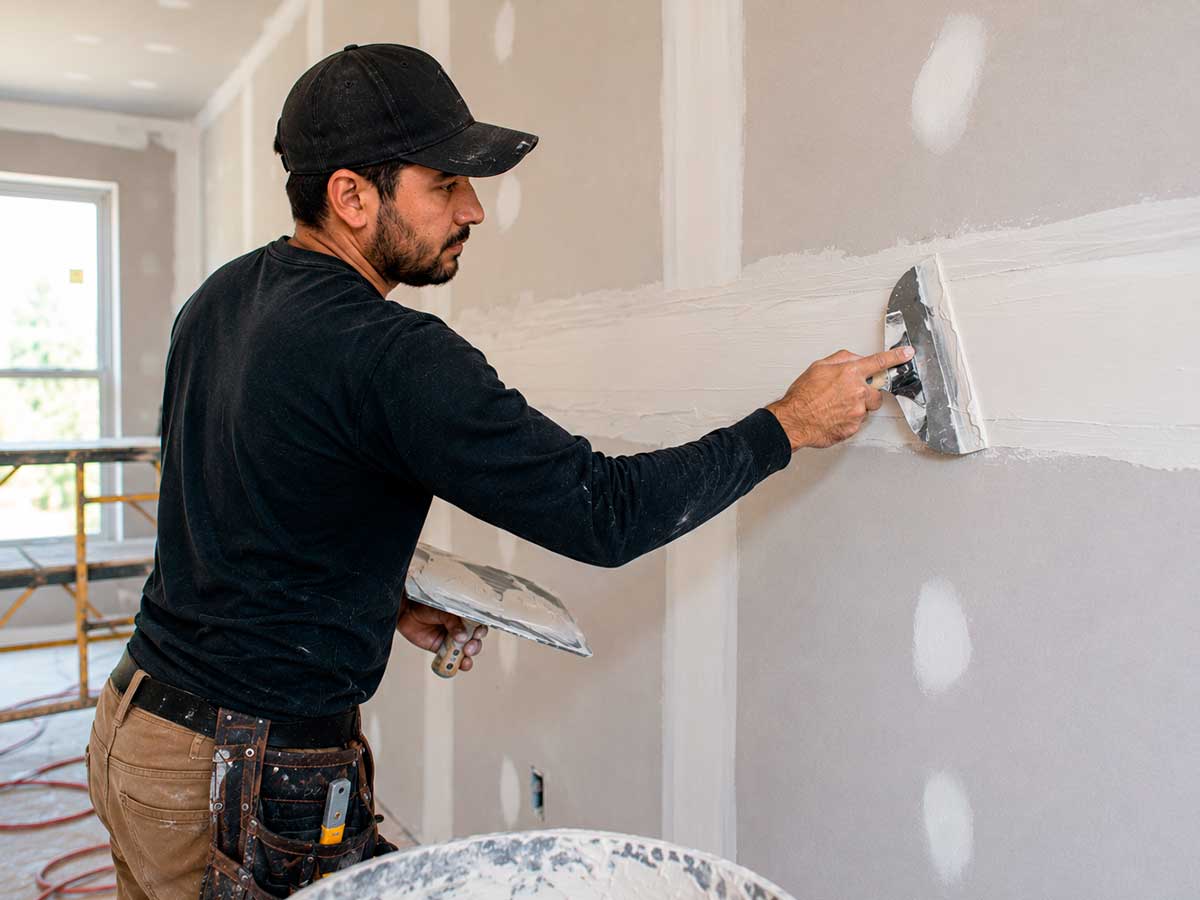
Professional Drywall Finishing Services in Farmington, CT
NBA Construction & Remodeling finishes drywall in Farmington homes along the historic Farmington Avenue corridor, in Unionville, Tunxis Mead, and the UConn Health area. Eighteen years finishing walls in Hartford County means our crew knows Farmington construction. The town has a mix of historic homes from the 1700s along Farmington Avenue with original plaster walls, mid century neighborhoods, and newer subdivisions throughout town. Commercial development around UConn Health adds office and medical buildouts to the mix. Each property type requires different finishing approaches and different finish levels.
Three layers of mud is standard practice on Farmington projects. The first coat embeds the tape. The second coat builds out the joint. The third coat feathers wide and levels the surface. Between each coat the work dries fully and gets sanded smooth. Farmington central Connecticut location along the Farmington River means cold winters need construction heat to maintain dry time schedules. Summer humidity affects work without proper ventilation. Skipping a coat or rushing the dry time creates problems visible from the day the painters leave a Farmington home or commercial space.
Farmington finish work covers more than flat walls. Inside corners need crisp tape lines without bowing. Outside corners need protected metal or paper bead with mud feathered out evenly. Butt joints demand patience and skill to hide. Farmington Avenue historic colonials have walls where new drywall meets original plaster, and the transition needs to be invisible after finishing. UConn Health medical office spaces need fire rated joint treatments and code compliant work. Patches over electrical work, plumbing access, and ceiling repairs all need to blend invisibly into the surrounding surface.
Tape and Mud Application in Farmington
Taping is the foundation of every Farmington drywall finish. We use paper tape on flat joints and inside corners because paper bonds tighter to mud than mesh. The first coat of mud goes on thin enough to bed the tape without trapping air bubbles. Farmington homes with high end finishes show every wrinkle, bubble, and lifted edge in the tape coat. UConn Health medical office fire rated assemblies need tape applied to match UL listed designs. Our crew works clean on Farmington projects, applies tape with steady pressure, and inspects every joint throughout the application process.
The second coat builds the joint out wider on Farmington walls. We switch to a ten inch knife and feather mud over both sides of the seam. The goal is a smooth transition between the joint and the surrounding wall, not a buildup of material. Farmington Tunxis Mead new construction often has modern open layouts with long uninterrupted wall runs that demand careful feathering. Too much mud creates a hump that no amount of sanding can fix. Too little leaves the tape edges visible. We mix mud to the right consistency for Farmington conditions on every project we work in town.
The third and final coat is where the Farmington wall comes together. A twelve or fourteen inch knife feathers mud out wide and blends the joint into the wall plane. Light pole sanding takes off any ridges or knife marks. After the third coat, the joint should be invisible under proper light. We check our Farmington work with a halogen or LED at a low angle, the same way the finished wall will look under the lighting common in Farmington Avenue colonials, Tunxis Mead modern homes, and UConn Health commercial spaces. Any flaw gets fixed before primer goes up.
Sanding and Surface Preparation
Sanding is where most finishing jobs go wrong in Farmington homes. Too aggressive and the paper face of the drywall gets fuzzed. Too gentle and ridges, knife marks, and high spots survive into the paint. Farmington high end residential paint products and modern LED lighting in renovated homes magnify every sanding error. We use 150 to 220 grit sanding screens or sandpaper depending on the situation. Pole sanders for big surfaces, hand blocks for corners and detail areas in Farmington finished spaces that need careful work to match the surrounding finish quality throughout.
Dust control matters in occupied Farmington homes. Farmington Avenue historic colonials often have valuable original details that cannot tolerate dust contamination. UConn Health medical office spaces need careful dust control because medical equipment and adjacent tenant spaces stay sensitive during construction. We use HEPA equipped sanders or wet sanding methods for Farmington projects where airborne dust is a problem. Plastic sheeting seals off rooms not under work, and we vacuum thoroughly between coats and at the end of each work day during the project.
Final inspection happens with side lighting before primer goes up on Farmington projects. We walk every wall and ceiling looking for shadows, ridges, or marks the eye misses under normal lighting. Anything that catches the light gets re mudded and re sanded. Skipping this step is why so many Farmington homeowners see joints show up after the painters leave. The natural light through Farmington Avenue colonial windows, the wall sconces in older homes, and the medical office lighting in UConn Health area buildouts all expose flaws different ways.
Why Drywall Finishing Quality Matters in Farmington
A poorly finished wall shows in every Farmington paint job that follows. Glossy and semi gloss paints magnify every flaw. Modern lighting in Farmington homes, especially LED downlights and wall sconces, throws shadows over the smallest imperfection. The painter cannot fix what the finisher did wrong. When the paint is done and joints start to telegraph in a Farmington home, the only fix is to skim coat the wall again and repaint, which doubles the cost of the project. UConn Health medical offices that fail finish inspection delay tenant occupancy and cost rent on space.
Level of finish matters in Farmington and most homeowners do not know to ask. Level 4 is the standard for residential walls under flat or eggshell paint. Level 5 adds a skim coat over the entire surface and is required for high gloss paints, raking light conditions, or critical commercial finishes. UConn Health medical office spaces with critical lighting and Farmington Avenue colonials with feature lighting often need Level 5. We tell you what level your Farmington project actually needs based on the lighting and paint product.
Time matters too on Farmington projects. Drywall mud needs to dry between coats. Joint compound dries through evaporation, which means humidity, temperature, and air movement all affect the schedule. Farmington central Connecticut location means cold winters need construction heat to maintain proper dry time schedules. Summer humidity slows drying without proper ventilation. Rushing dry time leads to cracks, sagging, and finish failures within weeks of completion. Our crew schedules around proper dry times even when the client wants the job done faster.