Professional Drywall Finishing Services in Greenwich, CT
NBA Construction & Remodeling finishes drywall in Greenwich homes and small commercial spaces from Belle Haven to Backcountry. Eighteen years finishing walls in Fairfield County means our crew knows what Greenwich homes demand. High end finishes in estate kitchens, Old Greenwich beach renovations, and downtown commercial buildouts all show every flaw under the lighting these projects use. We deliver Level 4 finish on most jobs and Level 5 when the lighting or paint sheen demands it. The standard does not change between a single bedroom and a full estate fitout in Backcountry.
Three layers of mud is standard practice on Greenwich projects. The first coat embeds the tape. The second coat builds out the joint. The third coat feathers wide and levels the surface. Between each coat the work dries fully and gets sanded smooth. Greenwich homes often have high ceilings, wall sconces, and statement lighting that highlight every imperfect joint. Skipping a coat or rushing the dry time creates problems visible from the day the painters leave. Our crew works the proper schedule on every Greenwich project from Riverside cottages to Belle Haven estates.
Greenwich finish work covers more than flat walls. Inside corners need crisp tape lines without bowing. Outside corners need protected metal or paper bead with mud feathered out evenly. Butt joints, the hardest part of any finishing job, demand patience and skill to hide. Greenwich estates often have long uninterrupted wall runs in great rooms and master suites where butt joint placement becomes critical. Patches over electrical work, plumbing access, and ceiling repairs all need to blend invisibly. After eighteen years finishing Greenwich homes, we know where shortcuts cause callbacks.
Tape and Mud Application in Greenwich
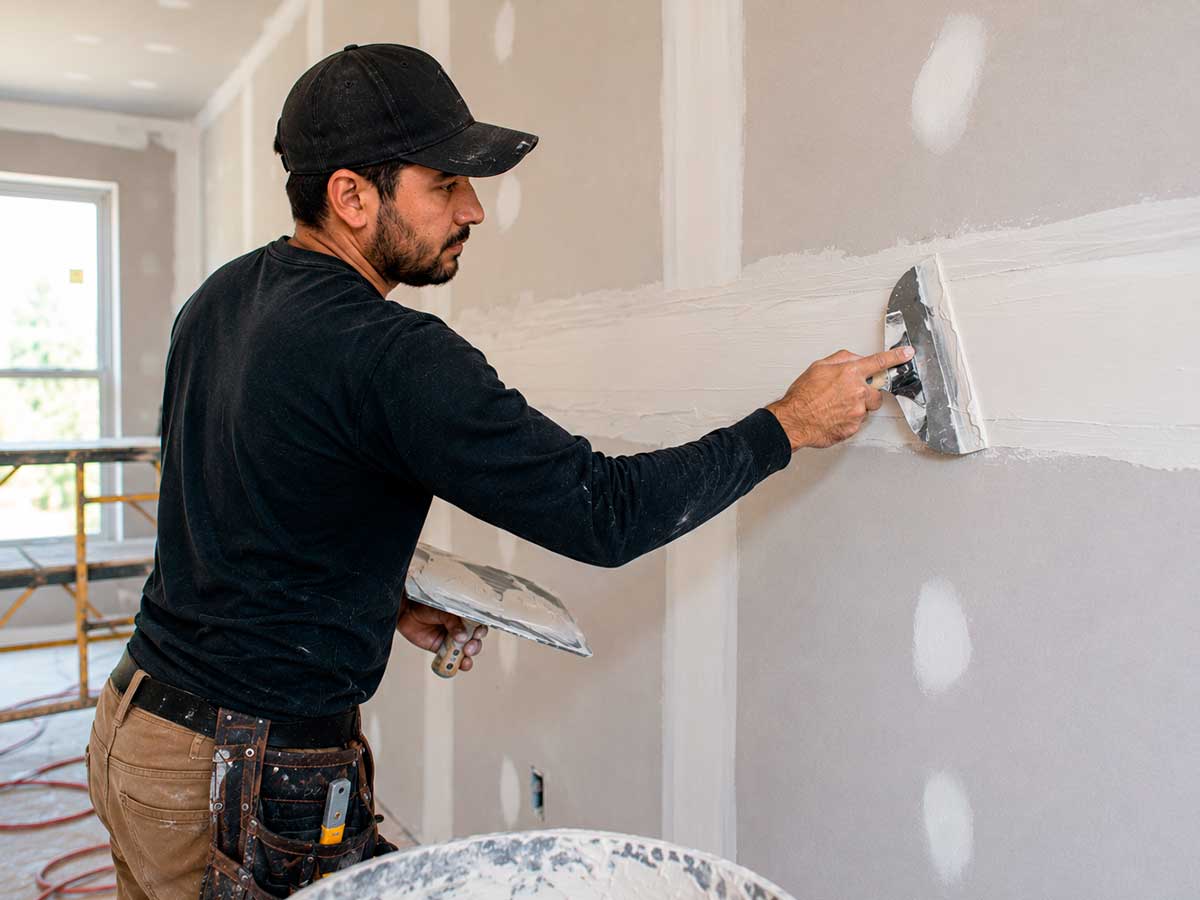
Taping is the foundation of every Greenwich drywall finish. We use paper tape on flat joints and inside corners because paper bonds tighter to mud than mesh. The first coat of mud goes on thin enough to bed the tape without trapping air bubbles, then gets pressed flat with a six inch knife. Greenwich homes with high end finishes show every wrinkle, bubble, and lifted edge in the tape coat. Our crew works clean, applies tape with steady pressure, and inspects every joint before moving forward to the second coat application phase.
The second coat builds the joint out wider on Greenwich walls. We switch to a ten inch knife and feather mud over both sides of the seam. The goal is a smooth transition between the joint and the surrounding wall, not a buildup of material. Greenwich estate walls in Backcountry and Belle Haven often run twenty feet or longer without interruption. Too much mud creates a hump that no amount of sanding can fix. Too little leaves the tape edges visible. We mix mud to the right consistency, work in light layers, and let each coat dry completely.
The third and final coat is where the Greenwich wall comes together. A twelve or fourteen inch knife feathers mud out wide and blends the joint into the wall plane. Light pole sanding takes off any ridges or knife marks. After the third coat, the joint should be invisible under proper light. We check our Greenwich work with a halogen or LED at a low angle, the same way the finished wall will look under the wall sconces and natural light common in Belle Haven, Old Greenwich, and Riverside homes. If a flaw shows, we fix it before paint goes up.
Sanding and Surface Preparation
Sanding is where most finishing jobs go wrong in Greenwich homes. Too aggressive and the paper face of the drywall gets fuzzed, which shows through paint as a different texture. Too gentle and ridges, knife marks, and high spots survive into the paint. Greenwich high end paint products and the lighting in these homes magnify every sanding error. We use 150 to 220 grit sanding screens or sandpaper depending on the situation, and we work with proper lighting to see what we are sanding. Pole sanders for big surfaces, hand blocks for corners and detail areas in finished spaces.
Dust control matters in occupied Greenwich homes. Estate properties in Backcountry, Belle Haven, and Old Greenwich often have valuable furniture, original artwork, and high end finishes that cannot tolerate dust contamination. We use HEPA equipped sanders or wet sanding methods for jobs where airborne dust is a problem. Plastic sheeting seals off rooms not under work, and we vacuum thoroughly between coats and at the end of the project. Drywall dust gets everywhere in Greenwich homes if you do not control it from the start of the work.
Final inspection happens with side lighting before primer goes up on Greenwich projects. We walk every wall and ceiling looking for shadows, ridges, or marks the eye misses under normal lighting. Anything that catches the light gets re mudded and re sanded. Skipping this step is why so many Greenwich homeowners see joints show up after the painters leave. The wall sconces in Belle Haven, the natural light in Old Greenwich beach houses, and the picture lighting in Backcountry estates all expose flaws. By the time we hand off, the wall is ready for primer with no surprises.
Why Drywall Finishing Quality Matters in Greenwich
A poorly finished wall shows in every Greenwich paint job that follows. Glossy and semi gloss paints magnify every flaw. Modern lighting in Greenwich homes, especially LED downlights and wall sconces in Backcountry estates, throws shadows over the smallest imperfection. The painter cannot fix what the finisher did wrong. They can only highlight it. When the paint is done and joints start to telegraph in a Greenwich home, the only fix is to skim coat the wall again and repaint, which doubles the cost of an already significant project investment for the homeowner.
Level of finish matters in Greenwich and most homeowners do not know to ask. Level 4 is the standard for residential walls under flat or eggshell paint. Level 5 adds a skim coat over the entire surface and is required for high gloss paints, raking light conditions, or critical commercial finishes. Greenwich estates often have great rooms with floor to ceiling windows, paint in eggshell or higher sheen, and lighting that demands Level 5 work. We tell you what level your project actually needs based on the lighting and paint, then quote and execute accordingly with no surprises.
Time matters too on Greenwich projects. Drywall mud needs to dry between coats. Joint compound dries through evaporation, which means humidity, temperature, and air movement all affect the schedule. Greenwich coastal humidity along Long Island Sound slows drying compared to inland areas. Rushing dry time leads to cracks, sagging, and finish failures within weeks. Our crew schedules around proper dry times even when the Greenwich client wants the job done faster. The wall ends up right and lasts. Cutting corners costs more in callback than it saves on the front end.